Thursday, November 13, 2014

1989- The Greatest Summer Movie Season Ever?

  
   The summer movie season, as we know it today, officially began with the release of Steven Spielberg's monumental "Jaws" in 1975. Nearly every summer since has been a heated battle for box office supremacy as a rapid succession of action-packed spectacles vie for your hard-earned dollars. With each passing year it gets a harder to find the films that actually deserve it, which got me thinking- what IS the greatest summer movie season ever?

   According to my research, there are quite a few contenders(1982, 1984, 1988, 1990, 1993, 1994, 2002, 2004, 2008), but ONE summer stands a little taller than all the rest. The summer of '89 was nirvana for a nine year old, and the adults didn't have it too bad either as I later discovered once my tastes had matured a bit. So let's get down to business because there's PLENTY of it. Join me as I journey back to the crackling climax of the most fun decade in film history.


   You can have Robert Downey Jr. and Michael Bay's CGI robots. I'll take Harrison Ford on horseback, galloping after a tank filled with Nazis in the desert any day of the week. Don't let "Crystal Skull" cloud your judgment. Indiana Jones is the greatest hero of the 1980s without question, and Ford is the decade's premier leading man. His third and final(I'm still in denial) adventure got the season started off right on Memorial Day weekend. I was there with my family and it was two hours of pure cinematic bliss. "Raiders" will always get more respect and deservedly so. That unforgettable 1981 romp has sheer novelty on it's side, but I'll be damned if "Last Crusade" isn't it's equal. We got an action sequence for every mode of transportation and Sean Connery's casting was a stroke of genius. The moment the original 007 bellows "Junior!" for the first time(at roughly the 47 minute mark, that's how many times I've seen it), you're in movie heaven.


   The holy grail is the ultimate artifact and Indy was the ultimate source for pure summer escapism. "LC" feels like the end of an era in retrospect, and while I love the '90s for entirely different reasons, Scorsese and Tarantino had us rooting for the bad guys and there was a noticeable shortage of swashbuckling. Spielberg got more 'serious', tackling historical passion projects like 'Schindler's List", "Saving Private Ryan" and "Lincoln", while "Jurassic Park" went down as his last truly great popcorn flick(although I'm partial to "Minority Report "). Our greatest living director undoubtedly enhanced my childhood and countless others, and I'd like to take this opportunity to thank him for making me the man I am today. And Harrison Ford's three-day old beard, of course. Dr. Jones is always welcome in my living room. The 1930s version, that is.


   I love how diverse this summer was. That's the late, great Robin Williams pictured above celebrating one of his earliest triumphs, "Dead Poets Society". Back in Robin's heyday, 'good' movies weren't limited to that rigid Oct-Dec Oscar bait block. Now you're hard-pressed to find a worthwhile drama any other time of year. You can practically disregard everything that comes out between January and April, but that's a discussion for another day. Anyway, there were actually smart entertainment options for adults interested in more than just explosions and FX. That's something I sorely miss.


   The unorthodox, inspirational Mr. Keating more than held his own against extremely formidable fantasy fare with $96 million in ticket sales, eventually earning four Academy Award nominations including Best Picture. The Captain lost to "Driving Miss Daisy", but this film was still an absolute victory. Seize the day. Robin sure did.


   Five years earlier, Bill Murray became a permanent movie star and Dan Aykroyd became a temporary one, in Ivan Reitman's supernatural comedy sensation "Ghostbusters". I mentioned 1984 being a stellar summer for that very reason(along with first runner-up "Temple of Doom") which made 1989 a banner year for devotees of several '80s properties. But apparently it wasn't so easy getting this foursome back in proton packs. Supposedly, a mandatory meeting was held in early 1988 with all the key players to find out who or what was stopping everyone else in the room from making a massive pile of $$$. That meeting ended with studio top brass demanding that the sequel be in production within six months. That sort of pressure usually doesn't translate to quality or creativity, so we basically got the same movie all over again. I know a lot of people that weren't complaining, though.


   It just took too long to get "GBII" made. If it had come out in 1986 or '87, the box office could've been doubled and we wouldn't have been subjected to a decade of endless rumors and speculation about a third film because it would've been out in '89! THAT'S how you roll out a franchise, folks. This shit has to be done in a timely fashion. The GB craze was over by the early '90s(even the animated series concluded in '91) and there weren't nearly as many people humming Ray Parker's immortal theme song on their way to work. Both films became a permanent fixture on cable and I know I stopped my channel-surfing more than once when I saw that dancing toaster, but Dan Aykroyd's voice was the only one crying out for a trilogy. The reason can be found directly below.


   The most financially successful movie that Steven Spielberg and George Lucas had nothing to do with opened on June 23, 1989. You couldn't escape this bad-ass logo that year if you wanted to, and why would you? You see, things were quite a bit different then. Superheroes movies weren't released once a month, there wasn't this coldly calculated 'Cinematic Universe' crowding up the multiplex, swallowing up the expendable incomes of a generation that wasn't even alive when Michael Keaton kick-started a sub-genre by whispering two words("I'm Batman"). I know that Chris Reeve took flight more than a decade earlier, but the "Superman" series crapped out a couple of years before, casting serious doubt on the long-term viability of the whole superhero thing. Tim Burton deserves the credit(or the blame, depending on your point-of-view) for getting this ball rolling. "Batman" wasn't just a movie. It was a mass-merchandised pop culture event with unprecedented hype, and you could feel it in the air. It HAD to been seen, or you were getting excluded from conversations about the Batmobile, Nicholson's OTT Clown Prince of Crime and Kim Basinger's luscious blonde locks(okay, maybe I'm alone on that one). A climate like this will NEVER be recreated because superhero movies AREN'T special anymore. Blame Marvel for that.


"You got $60 million? But I'm the hero".
   This film's popularity just can't be overstated. There were only two possible choices for Halloween that year, and it's impact can still be felt more than a quarter-century on. Sure, the first set of Bat flicks didn't progress the way they were supposed to during the Clinton administration thanks to that shameful Schumacher and parasitic WB execs, and there's a tendency to bestow savoir status on Chris Nolan. But as great as "The Dark Knight" was, let's not forget where it all began.


   Every summer has a sleeper hit and you're looking at it. Long before Pixar and DreamWorks went to war, a non-animated family film could still draw a big crowd, and "Honey, I Shrunk the Kids" did just that. Joe Johnston's high-concept hit was an agreeable back-up plan for many parents that were secretly glad "Batman" was sold out because they heard about the Joker's hand-buzzer. Little kids were unafraid of Rick Moranis who was on quite a roll(more on that later) and Wayne Szalinski was the kookiest scientist this side of Doc Brown. "Honey" managed to land among the top twenty-five highest grossers of the entire decade without ever taking the top spot at the box office, ultimately becoming the most successful live action Disney film ever circa 1989. Those are some impressive credentials.


   While not exactly a classic, the film seems to be fondly remembered by my age group(the '92 sequel "Honey, I Blew Up the Kid", not so much) for it's giant Cheerios, perilous blades of grass and that cute ant(admit it, you cried).


   I'd just like to take a moment and show some love for "The Karate Kid Part III", because it's so ludicrously entertaining.  Daniel-san and Mr. Miyagi's swan song was released on June 30 and took a worse beating at the box office than Daniel took from 'karate's bad boy' Mike Barnes, in that tense tournament finale, thanks to the two abovementioned blockbusters. Terry Silver couldn't compete with Jack's Joker or that scary painting in "GBII", but he's still a slime-ball for the ages. Thomas Ian Griffith's pony-tailed, malevolent force of nature more than made up for Daniel's incessant whining(no wonder clay-making cutie Jessica Andrews only wanted to be a platonic pal).  His private karate lessons are the reason my viewings of this movie has reached the triple digits, and I'm unashamed of that. If a man can't see, he can't fight.


   Anybody that shits on "KKIII", and there were MANY pompous critics that did just that(a wholly unjust 16% on RT) is missing out on a delicious slice of '80s awesomeness. Just kick back and enjoy this film next time you come across it on cable(I'll bet it's on right now) because it was the last time a story such as the elaborate revenge plot cooked up by that California crime syndicate known as the Cobra Kai dojo would ever be deemed acceptable to a mass audience.


   Now would be a good time to mention that 1989 was the year that the buddy cop movie peaked. Sorry, Tango & Cash, but this is the duo I turn to when I'm in need of a fix. If Walter Matthau and Jack Lemmon shot people, they still wouldn't hold a candle to Gibson and Glover. Timothy Dalton's dull second Bond outing "License to Kill" didn't stand a chance. James Cameron's underwater epic "The Abyss" was largely ignored. That's how serious this summer was. Riggs and Murtaugh's explosive encore blasted onto screens in mid-July, knocking the Dark Knight out of the number one spot at the box office, and stayed there for three weeks. Did I mention it was rated R? It's easy to see why I'm so nostalgic for this era, because there was literally something for EVERYONE.


   This film's robust box office(it was third for the year behind "Batman" and "Indy") secured Mel Gibson's position on the A-list, allowing him the freedom(no pun intended) to step behind the camera for his 1995 masterpiece "Braveheart". Mel's ex-wife and his seven or eight kids should be extremely grateful that the multiple gunshot wounds Riggs suffered at the bottom of that ship in the rip-roaring finale weren't fatal, because "LW3" and "4" ended up bolstering all of their bank accounts, too. What I'm trying to say is that the winning formula of action and laughs("They FUCK you at the drive-thru") was perfected right here, and as long as the "Lethal" family stuck to it(they did), the only bomb was on Murtaugh's toilet.


The greatest romantic comedy not called "Annie Hall" dropped in late July to pose the eternal question- can men and women ever really be just friends?  Yes and no, according to director Rob Reiner and screenwriter Nora Ephron in their career-defining collaboration. This may honestly be the best film of the year, if I put aside my aging fan-boy allegiances. Billy Crystal has never had a better showcase for his sardonic wit and Meg Ryan has never managed to be more appealing despite her MANY appearances in the genre. Just think about how overwhelming it was for theater patrons between May-August to look up at the marquee and see all of these titles. You could watch Riggs go ballistic on a boat or have lunch with Sally Albright. You weren't regretting either decision.


 How adorable was Meg Ryan in '89? This is the Meg I choose to remember before Russell Crowe and some nameless plastic surgeon ruined our relationship. We weren't even able to stay friends. That's how bad things got. Fortunately, film is forever and I can relive the good times whenever I want. Ditto for Rob Reiner.


   Billy Crystal and Meg Ryan weren't the sole source of laughs in 1989. Steve Martin was the hottest comedic performer of this era not named Eddie Murphy, and he extended his late '80s hot streak("Roxanne", PT&A") in Ron Howard's humorous look at uh, parenthood from every conceivable angle. The comedy landscape has become increasingly dire in recent years, as evidenced by this past summer's slate("Neighbors", "Sex Tape", "Tammy", "Let's Be Cops"). I'm not trying to take some puritanical stance here, but all this crass crap really leaves me yearning for inoffensive family-friendly comedies like "Parenthood" and "Uncle Buck"(that John Candy classic came out in mid-August). This film boasted an ensemble that included Mary Steenburgen, Dianne Wiest, Jason Robards, Tom Hulce, Keanu Reeves and (yes) Joaquin Phoenix. They all contributed to the $100 million box office total(the magic number in those days). Wait a minute, I'm forgetting someone...


   How hot was Rick Moranis in '89? "Parenthood" made it a hat trick for the bespectacled SCTV graduate who had not one, not two, but THREE $100 million hits that summer. I know what you're thinking- how was this comedic titan allowed to retire so quietly? The answer can be found in 1996's "Big Bully", one of the few films that can be seen in it's entirety on YouTube(as of this writing), so check out his "funny" feud with Tom Arnold sometime.


Actually,... DON'T.


   So, there you have it. You know it was a hellacious summer when Brian De Palma's "Casualties of War" is an afterthought. This Sean Penn-Michael J Fox face-off would have been a definite highlight of any other year. Oh, and speaking of MJF...


   I know I'm cheating here, because Marty and Doc made they're long-awaited return on Thanksgiving Eve. My point is, forget the summer. Was 1989 THE greatest movie YEAR EVER??


Friday, October 31, 2014

Franchise Review- A Nightmare on Elm Street

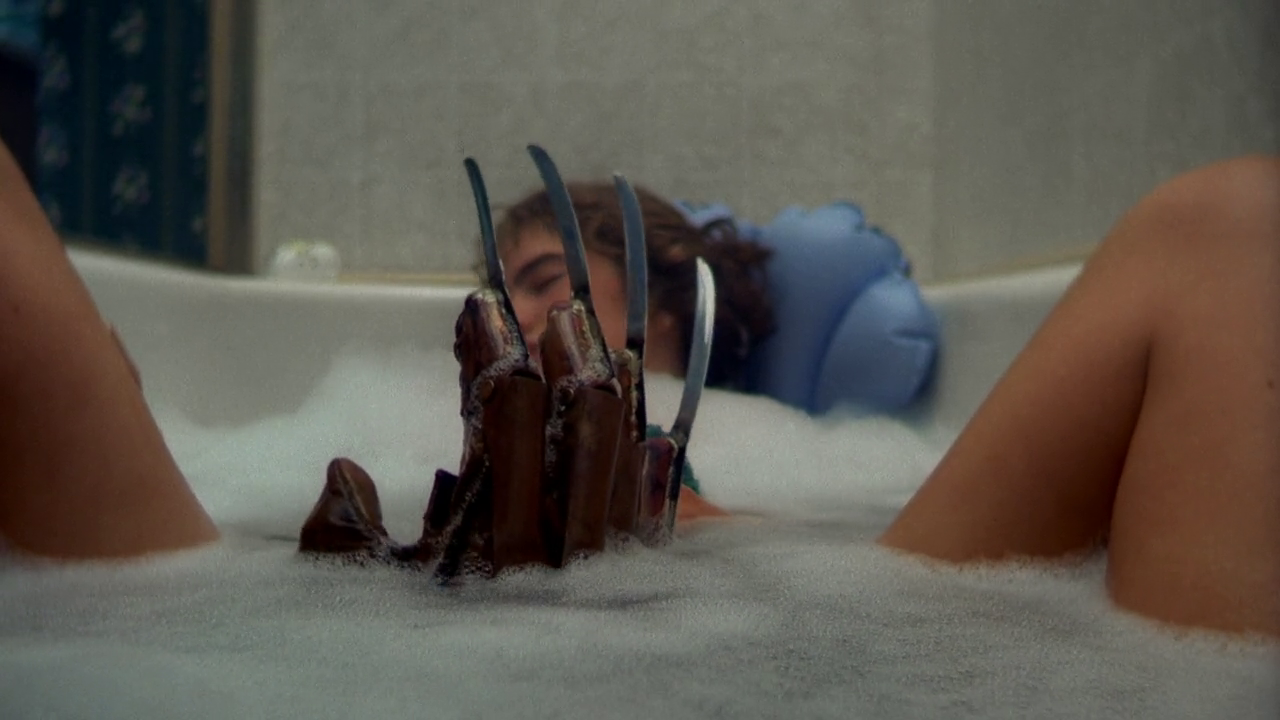
   It's the 30th anniversary of everyone's favorite fedora-wearing, razor-clawed child killer. Freddy Krueger is a pop culture icon. I can't say I'm happy to report that, but it's true. He's appeared in nine films(so far) since his entry into the pop culture landscape on November 9, 1984. It's Halloween(just go with it), so please join me as I recap his silver screen history. I can't do it alone.


"A Nightmare on Elm Street"(1984)
Wes Craven passed up the life on an East Coast college professor to enter the uncertain world of filmmaking in the early 1970s, beginning his industry training with a behind-the-scenes stint in pornography(which is fitting in a way). After turning heads with micro-budgeted horror hits like "The Last House on the Left" and "The Hills Have Eyes", a newspaper article about Cambodian refugees having disturbing nightmares(a few actually died in their sleep) provided the jumping-off point for Craven's career-defining creation. Robert Englund is relatively subdued and humorless in his first stint as the embodiment of evil(that's a compliment), ultimately achieving the kind of nasty notoriety not seen since the early days of Christopher Lee and Peter Cushing. Krueger killed a future A-list hearthrob named Johnny Depp in his debut flick. That has to count for something.

   There's only two films in this felonious franchise that can be discussed with anything that remotely resembles reverence, and 1984's "Elm Street" is certainly one of them. Coupled with 1978's seminal "Halloween", it's now regarded as the high watermark of a rather dubious slasher cycle(I'm looking at you, Jason). The fact is that Craven never wanted Krueger to join his hockey mask-wearing counterpart as an ominous omnipresence. But in the wake of their first real revenue in nearly a decade, the fledging New Line Cinema(aka The House That Freddy Built) didn't really care what Wes wanted.


"A Nightmare on Elm Street 2: Freddy's Revenge"(1985)
This first in a LONG line of sequels was clearly rushed into production to capitalize on the first film's surprising success, which was par for the course in the land of '80s horror. Strike while the iron is hot(or cold, no matter). Freddy is apparently out for revenge if the title is to be believed, odd considering the lack of continuity and returning cast members in this sophmore outing. The bastardization of Craven's initial concept began with this film's curious homosexual subtext(females NEED to star in these things, it isn't rocket science). At least we rarely remember our dreams. For proponents of quality cinema, Krueger would become a recurring nightmare.


"A Nightmare on Elm Street 3: Dream Warriors"(1987)
"Welcome to prime time, bitch"! Freddy's greatest line? It sure set the tone for what was to come. There's a few reasons why this third installment is the most tolerable of the lot, and arguably equal to the original. Wes Craven returned to script the concluding chapter in the sinister saga(or so he thought!) and brought Heather Langenkamp back with him to mentor a fresh crop of traumatized teens. Chuck Russell is a competent director(he would later help further Jim Carrey's cause in "The Mask") and an 18 year old Patricia Arquette is the best actress to ever grace this series. We even get "Larry" Fishburne thrown in for good measure, and some creative special effects, while a $45 million gross(on a $4.5 million budget) meant that there was no end in sight.


"A Nightmare on Elm Street 4: The Dream Master"(1988)
Robert Englund takes center-stage and a new batch of young victims are once again made up entirely of disposable unknowns in this inexplicably popular Renny Harlin-directed debacle. This was the first "Nightmare" to be given a summer release, presumably based on the strength of the third film, and a three-week stay at the top of the box office marks "The Dream Master" as Freddy's pop culture peak. This grisly goodwill tour led to TV appearances, video games, fan mail AND groupies(according to Englund). It's hard to believe there was a time when we thought these movies were scary. It's even harder to believe there was a time when we thought they were good.


"A Nightmare on Elm Street 5: The Dream Child"(1989)
"What I can't figure out is how he's getting in when I'm awake?!" I can't figure it out, either. Freddy is still a malevolent jokester and the cringe-worthy acting is getting increasingly tough to take. Fortunately, the paying public was coming to their senses, and 1989 was looking like the end of the road for the unholy trifecta of slasher villains, as "Halloween 5: The Revenge of Michael Meyers" and "Friday the 13th Part VIII: Jason Takes Manhattan" were both rejected that same year. Unfortunately, as long as there's a lowest common denominator to exploit, the powers-that-be behind these pitiful productions have zero qualms about doing so.


"Freddy's Dead: The Final Nightmare"(1991)
Okay, no more Mr. Nice Guy. Fuck you, Freddy. The '80s are over and I've had more than my fill of your scarred skin and witless one-liners. The title of your sixth atrocity doesn't fool me. You're not DEAD, asshole and this isn't the FINAL anything and not even your dumbest teen victims were buying into this fake farewell. You were only ever mildly amusing during the best of times, and Hannibal Lecter and Max Cady would both wipe the floor with your skinny ass. Whew. Needless to say, "Freddy's Dead" was D.O.A. in the fall of '91, and only his disapproving creator was capable of a resuscitation.


"Wes Craven's New Nightmare"(1994)
After expressing his dislike for the bombastic, overly comedic nature of the bulk of the sequels(he had no real involvement in 2, 4, 5, and 6), Wes Craven was lured back to the director's chair for a tenth anniversary attempt to restore some of Freddy's lost luster. Did he succeed? Sort of. Original heroine Heather Langenkamp resurfaces(as herself) to protect her son from a darker, more elusive Freddy as he terrorizes the cast and crew responsible for his films(they deserve it). This new cerebral take is admirable, and in retrospect feels like a dry run for his forthcoming self-aware "Scream" series, which reignited the whole genre in the late '90s. However, ticket sales didn't reflect Craven's efforts to ACTUALLY put out a decent product, and 1994's filmgoers had more important matters at hand(ahem, "Pulp Fiction").


"Freddy vs. Jason"(2003)
Here we go. This is the smack-down we waited ten years for. Well, that's not true. I wasn't waiting. That teaser at the conclusion of 1993's appropriately-titled "Jason Goes To Hell" set the stage for this joint venture which, let's face it, was the only way these two characters were making it to the 2000s. It's every bit as soul-crushing as the majority of their solo outings as the twin titans of trash seem to be competing for new victims that include Kelly Rowland of "Destiny's Child" fame and Jason Ritter(son of John). I'm proud to say that this nostalgia-driven cash-grab didn't get any of mine.


"A Nightmare on Elm Street"(2010)
Is nothing sacred? If you don't detect my sarcasm and you think the "Nightmare" series is, I strongly suggest you expand your horizons. I don't hate this inevitable remake because it doesn't offend me any more than the genre's usual offerings, but I'm also grateful that a nondescript Jackie Earle Haley won't be taking another stab at sleeping teens. Katie Cassidy was well-cast(translation: she's a hot young blonde). Rooney Mara, as surviving good girl Nancy, said she disliked the experience so much that she considered giving up on her acting career before it ever really started.  Is the ensuing carnage REALLY any worse than the old school Englund flicks? No, but we're talking about a pretty low bar. Freddy will always be present in my nightmares. Just not in the way that Wes Craven intended.


Monday, September 8, 2014

Twelve Directors That Completely Lost It


   Directing is arguably the toughest job in Hollywood. The first thing I learned as a budding cinephile is that the director is, in most cases, primarily responsible for the critical success or failure of a film. Your favorite actors and actresses can only look as good as the director allows them to be. Those scenes that stick in your memory are usually the result of a director making the right choice on the set or in the editing room. A great director doesn't move forward until every aspect of the production feels just right and there's only a select few that the general public can instantly identify, from deceased masters like Hitchcock and Kubrick to their present day counterparts Spielberg and Scorsese. Savvy movie fans anticipate each new offering from David Fincher and the Coen bros. If you've got a few hours to kill, they'll give you an exhausting breakdown of Woody Allen's output over the years. You probably know somebody that thinks Chris Nolan is God's gift to 21st century cinema and that Tarantino's talky lowlifes and non-linear antics changed the game between 1992-94.

   Every director secretly dreams of amassing a similarly devoted following among moviegoers. This is a list of filmmakers that once had greatness within arm's reach or at least a legitimate shot at it. For varied reasons that I'll try my best to explain, it didn't happen. Every guy on this list directed one film that you love. Maybe more. Then their worlds came crashing down. Here are twelve directors that completely lost it.


Frances Ford Coppola
Alright, let's jump right into this- "The Godfather", "The Conversation", "The Godfather Part II" and "Apocalypse Now". If I have to explain the virtues of any those films, then I'm wondering how you even stumbled onto this article. The fact that Coppola hasn't given us ONE film that even comes close to that celebrated quartet indicates that he blew his wad on Brando and Pacino and should have retired as a mythical, god-like figure in 1979. Instead, he burned studio money on losers like "One from the Heart", "Rumble Fish" and "The Cotton Club". The story goes that Frances piled up some debts in the mid-'80s and artistic integrity became secondary. That's what presumably led to commercial fare like the Kathleen Turner vehicle "Peggy Sue Got Married", while occasional Oscar bait like "Gardens of Stone" and "Tucker: The Man and His Dream" missed the mark. As for "The Godfather Part III".....uh, I liked it. "Bram Stoker's Dracula" didn't suck thanks to a prime Gary Oldman, but "Jack" was a real head-scratcher in 1996 that even the biggest admirers of the late, great Robin Williams don't seem to have any affection for. "The Rainmaker" was an undistinguished John Grisham adaptation in '97 that represents his last attempt to appeal to the masses. Since then Coppola has preferred the secluded safety and no-pressure environment of 'personal' projects that nobody even knows the existence of. Btw, I could have added Sophia to this list without any objections.


William Friedkin
Few filmmakers start their careers with two time-honored classics and then go on to produce inexcusable trash. Well, that's the story of Billy Friedkin. "The French Connection" won Best Picture in 1971 and Gene Hackman's Popeye Doyle predates Dirty Harry in the storied annals of tough movie cops. People still talk about that car chase through real traffic. "The Exorcist" still tops every list of scariest movies ever made, and Linda Blair spewing pea soup is as iconic as a Norman Bates shower interruption. It would take this entire blog to figure out exactly what happened after that. "Sorcerer" had NO chance against "Star Wars" in '77 and Friedkin admitted to being demoralized by it's abject failure.  He then delivered one of 1980's worst movies- the much-maligned "Cruising". Al Pacino looked as uncomfortable making this controversial cop thriller as the average viewer felt watching it, with more offensive homosexual stereotypes than you can shake a stick at(sorry) and he followed it up with a Chevy Chase comedy(WTF?). "To Live and Die In L.A." was a brief return to form in 1985, but "Rampage" and "The Guardian" both vanished without a trace. 1995's "Jade" was the last straw, a lurid byproduct of "Basic Instinct" that resulted in his permanent removal from any list of great directors. He kept working though, turning out unexceptional thrillers like "Rules of Engagement" and "The Hunted". Critics have been unusually kind to him in recent years, but don't call "Bug" and "Killer Joe" a comeback.


John Carpenter
Another '70s sensation, Carpenter worked wonders with small budgets, starting with "Assault on Precinct 13" and is widely acknowledged as the grandfather of the modern slasher movie. His much-imitated masterpiece "Halloween" cost $320,000. It grossed over $47 million in 1978 and gave Jamie Lee Curtis a movie career. He oversaw a few of the sequels while Ronald Reagan was in office and simultaneously began a long and fruitful relationship with Kurt Russell. The duo gave us "Escape From New York", "The Thing" and "Big Trouble in Little China"- all beloved cult classics in some circles. He even managed to make something out of "They Live" with wrestler 'Rowdy' Roddy Piper. Carpenter's luck ran out in the '90s, though. "Memoirs of an Invisible Man" starring Chevy Chase(is he bad luck or something?) was a sci-fi comedy that's been pretty invisible since it's underwhelming theatrical release in the summer of '92. Then this fool started proudly stamping his name on films that most directors would try to disown. "John Carpenter's In the Mouth of Madness", "John Carpenter's Village of the Damned". "John Carpenter's Vampires" and "John Carpenter's Ghosts of Mars". There was nary a profit in sight. "Escape From L.A." was a pathetic encore for Snake Plissken that arrived at least ten years too late. His last film to date was 2010's "The Ward". I don't remember it either.


Martin Brest
Although never a household name, the Bronx-born Brest was was behind the camera on 1984's "Beverly Hills Cop", the mega-hit that launched Eddie Murphy into the stratosphere(he was also behind the desk at the Beverly Hills hotel in the film's closing scene). Four years later, he sent Robert De Niro and Charles Grodin on a "Midnight Run". It's safe to say the man knew his way around an action comedy. He seemingly cemented his rep when he guided Al Pacino to his only Academy Award for Best Actor in 1992's "Scent of a Woman", but "Meet Joe Black" was a ponderous, two hour and fifty minute snooze-fest in 1998 that could have ruined Brad Pitt if Tyler Durden hadn't been in his immediate future. Brest doesn't have a future thanks to "Gigli". The infamous flick that united Ben Affleck and Jennifer Lopez sold way more tabloids than movie tickets and has since become a synonym for cinematic awfulness. Someone had to take the blame and Brest was the easiest person to punish in this scenario. He was reportedly difficult to work with at various points and now the industry bigwigs had the excuse that they may have been looking for to show him the door. He hasn't worked since 2003. It doesn't seem fair, but two mega-flops in less than five years may be an unforgiveable offense. Brest could just be an example of an above-average director who got really lucky in the first half of his career.


John McTiernan
Action movie buffs will always have a soft spot for this NY native. He broke through the ranks via one of the manliest movies of all time, the franchise-starting 1987 Arnold Schwarzenegger classic "Predator". Oh, speaking of action franchises, maybe you heard of the one with Bruce Willis. That's right, McTiernan was behind the camera capturing all that glorious carnage in the Nakatomi building on Christmas Eve in 1988 for which we are all eternally grateful. He returned for the best of the "Die Hard" sequels(1995's "With A Vengeance") which arguably gives him co-ownership over John McClane with Mr. "Moonlighting" himself. He even got the ball rolling for Jack Ryan in 1990's "The Hunt For Red October". I wish I could stop there, but there's no getting around "Last Action Hero". I don't hate that movie, but it's a fact that this mega-hyped Arnie vehicle got devoured by "Jurassic Park" in the summer of '93 and the Austrian Oak hasn't returned his phone calls since. The moderate success of "The Thomas Crown Affair" remake in 1999 couldn't be basked in for long, with his Antonio Banderas starrer "The 13th Warrior" flat-lining that same year. "Rollerball" was a costly futuristic flop in 2002 and the dull military drama "Basic" didn't fare much better in 2003. On top of his greatly diminished ability to entertain audiences, McTiernan was implicated in a Hollywood wiretapping scandal and actually spent a year in federal prison following a series of lengthy, distracting court battles. He's a free man now and is reportedly prepping a "Top Gun"-type film with John Travolta. I hope that works out for him(it won't).


Renny Harlin
Many will take exception with the implication that Renny Harlin ever approached greatness, but here me out. The blonde from Finland got his feet wet calling the shots on "A Nightmare On Elm Street 4: The Dream Master", which was the highest-grossing horror film of the '80s for what it's worth. As I alluded to earlier, John McTiernan was unable to take the reigns for John McClane's second outing, so Harlin stepped in and delivered a solid summer sequel with "Die Hard 2: Die Harder". That same year, "The Adventures of Ford Fairlane", starring Andrew 'Dice' Clay, was an early sign of trouble. In my opinion, Renny made the best non-Rocky/Rambo Stallone movie ever in 1993, which was called "Cliffhanger". He was settling into a nice role as one of the go-to guys for '90s action, but his ambition may have exceeded his talent. A healthy ego mixed with a huge budget is a recipe for disaster if you're name isn't James Cameron, which brings me to "Cutthroat Island". Pound for pound, that 1995 pirate adventure is the biggest box office flop in motion picture history. It lost $100 million, bankrupted Carolco studios and banished his real life leading lady Geena Davis from the A-list. Talk about taking the wind out of a guy's sails. The couple's next collaboration, 1996's "The Long Kiss Goodnight", got a much better reception, but almost anything would have and it couldn't stop the divorce papers. "Deep Blue Sea" and "Driven", released in '99 and '01, both got a mixed response if we're being generous. But then he took a shit on the legacy of "The Exorcist" in a 2004 prequel and was reduced to fringe thrillers like "Mindhunters" and "The Covenant". His return to 'old school' action territory in 2009 resulted in the terrible "12 Rounds" starring WWE champ John Cena. At this point, any studio green-light has to be considered a victory for Geena Davis' ex.


Jan de Bont
This Dutch cinematographer is a true Hollywood vet that worked his way up the ladder on countless films and I guarantee that his expert lighting enhanced the pleasure of watching each and every one of them. When he finally got his chance to be the main man in 1994, he took us on an unforgettable ride aboard a Los Angeles city bus with Keanu Reeves and Sandra Bullock, insuring that fresh-faced duo's continued presence on the silver screen. He followed that blistering breakthrough with "Twister", an-even-more massive hit that kicked the summer of '96 off right. It looked like explosive-filled escapism had a new name and it was Jan de Bont. Not so fast. "Speed 2: Cruise Control" was set aboard a SLOW cruise ship and is easily one of the most reviled sequels this side of "Batman & Robin". Fox executives were surely left weeping at the loss of the franchise that might have been. I hope Jan talked to Renny Harlin before he made any extravagant purchases because "The Haunting" didn't put him back in anyone's good graces two years later. "Lara Croft: The Cradle of Life" marked the end of his professional life and it didn't take a genius to keep the lens locked on a 27 year old Angelina Jolie. The movie biz is a fickle beast and I don't think de Bont was planning on an early retirement. Sadly, I may be the only one that noticed it.


Joel Schumacher
I don't mean to beat a dead horse, but this was just totally unavoidable. You already know why this guy is on here and so does your grandma who doesn't know anything about movies. I still have to point out that Joel S. made a handful of very watchable films before he took that fateful call from Warner Bros sometime in the fall of 1993, a day that will live in infamy. But his work on "St. Elmo's Fire", "The Lost Boys", "Falling Down" and "The Client" seems to have been forgotten in the wake of the Bat-astrophe that got fan-boys' blood boiling. They wanted his long, grey-haired head on a stick. Schumacher could tell George Lucas a thing or two about irate theater patrons. He gave Mathew McConaughey his first close-up in "A Time To Kill", a fact rarely acknowledged since George Clooney pulled that credit card out of his utility belt. He tried to restore his rep with "8 MM", "Flawless", "Phone Booth" and "The Number 23". Unforgiving audiences were having none of it. Look, it's been almost twenty years and the Caped Crusader is alive and well, don't you think it's time we give this poor bastard a break? No? Sorry, Joel, I tried.


Rob Reiner
From 1984 to 1992, Archie Bunker's son-in-law directed "This Is Spinal Tap", "The Sure Thing", "Stand By Me", "The Princess Bride", "When Harry Met Sally", "Misery" and "A Few Good Men". Each one of those films is either a modern classic or a cult favorite and Reiner was starting to look like a legend in the making. His winning streak came to an abrupt and screeching halt with 1994's "North". For those blissfully unaware, Reiner led a twelve year old Elijah Wood and a large supporting cast through the worst project that most of them would ever be a part of in this alleged 'comedy'. Critics tore it apart and audiences ignored it altogether. If there was ever a film that represented a seismic shift in the public's perception of a director, "North" is it and Reiner has yet to offer an apology or an explanation. He bounced back momentarily with 1995's "The American President", but everything he's done since has been a VERY mixed bag- "Ghosts of Mississippi", "The Story of Us", "Alex & Emma", "Rumor Has It...", "The Bucket List", "And So It Goes". A considerably less impressive list of credits to put it gently. What the hell happened to Rob Reiner?! The world may never know.


Oliver Stone
This one hurts, too. I include Oliver Stone with mild trepidation. From 1986 to 1991, he was the best director on the planet. "Platoon", "Born on the Fourth of July", and "JFK" is his holy trifecta and are all indisputably great movies. The fearless provocateur also managed to crank out "Salvador" and "Wall Street" during this highly productive period. Stone seemed to be effortlessly operating on an artistic level that few filmmakers ever come close to. It's a pace that may have been impossible to maintain. "Heaven & Earth", the third chapter in his 'Vietnam trilogy', brought Stone back down to earth when it failed to match his prior acclaim in 1993. Then came "Natural Born Killers". One of the most polarizing films to ever hit the mainstream, half the public hailed the Woody Harrelson-Juliet Lewis killing spree as another Stone masterpiece. The other half walked out when Rodney Dangerfield showed up. He forged ahead in the mid-to-late '90s with the mostly respectable trio of "Nixon", U Turn", and "Any Given Sunday" but his previously strong support from the critics was noticeably absent. Stone reached his nadir with 2004's "Alexander". I wish I could omit the Colin Farrell-starring historical epic from his resume because it's unquestionably one of the most misguided films of the 2000s. It's hard to knock a movie as well-intentioned as 2006's "World Trade Center", yet many came away wondering what the rabble-rousing, younger version of Stone would have done with a subject as potent as 9/11. He even took it easy on our much-maligned 43th President in 2008's "W", before orchestrating an unnecessary and anti-climactic encore for Gordon Gekko in 2010's "Wall Street: Money Never Sleeps". "Savages" was a bit of depraved fun in 2012, but each new project he tackles makes it more clear that his best days are behind him.


M. Night Shyamalan
Here we go. You knew this one was coming. M Night just may be the poster boy for directorial decline. He fell so far that many people have decided that they don't like "The Sixth Sense" anymore. In Night's defense, I remember the summer of '99 and this guy had us ALL seeing dead people. That flick made more money that year than any movie not called "Star Wars Episode I: The Phantom Menace" and had Newsweek proclaiming him the next Spielberg. He quickly reunited with Bruce Willis for 2000's "Unbreakable" and many were using that word to describe Shyamalan. "Signs" starring Mel Gibson did big business back when people were still willing to pay to see Mel Gibson, but Night's trademark shock endings were becoming a double-edged sword. You see, you can't really shock people after they've spent an hour and forty-five minutes EXPECTING a shock of some sort. You'd think an A-list director would know something like that. Shyamalan mistakenly believed that a 'clever' twist could make up for an otherwise unsatisfying viewing experience, a theory proven incorrect by 2004's "The Village". But Night's ego was such that no critic or studio suit could tell him how to make a movie, which led to the equally unpopular "Lady in the Water" in 2006. Just when it seemed like things couldn't get any worse, "The Happening" happened in 2008. This man went from genius to joke in less than ten years, and asking someone if they like M Night Shyamalan now is like asking someone if they like the Ebola virus. "The Last Airbender" was intended to be the first in a trilogy in 2010, but there wasn't a person on the planet willing to go along with that. I could delve into why "After Earth", featuring Will Smith and his son Jaden, was one of 2013's least-loved films but we've passed the point of redundancy. I wish I could end this on an optimistic note, but you or I are probably more likely to craft a worthwhile contribution to the art of cinema than this one-time wunderkind.

*Updated Feb 2017
Hey, I can admit when I'm wrong. "Split" is a big hit that reminded us what we loved about Shyamalan. He was always talented. I'll be rooting for him.


Kevin Smith
So, you thought we couldn't sink any lower than Shyamalan? Guess again. This fat fuck is the grand finale. I swear, I'm not enjoying this(remember, I sat through most of these movies). Kevin Smith famously maxed out multiple credit cards, sold his comic book collection and turned $30,000 into $3 million in 1994 with his foul-mouthed film festival breakthrough "Clerks". That deserves respect, as does 1997's "Chasing Amy", the definitive high point of his '90s heyday. "Mallrats" and "Dogma" have some scattered devotees, and I'll even go against my better judgment and admit to(mostly) enjoying "Jay and Silent Bob Strike Back". But Smith lost his indie cred cool a LONG time ago and fell flat on his face when he entered the land of big budget mainstream studio comedies. This jersey-wearing jackass shat out "Jersey Girl", Zack and Miri Make a Porno" and "Cop Out" to completely dispel any notion that he was ever a top tier filmmaker. Ironically, Silent Bob seems to have talked his way into high-profile jobs while not learning a thing that could have made one of them work. I envy anyone that didn't compulsively force themselves to suffer through his subsequent horror outings "Red State" and "Tusk" because they had a movie blog to write. In recent years, Smith has managed to parlay his professional fan-boy status into a popular podcast and paid speaking engagements where he discusses actors and directors way more successful and relevant than him and mega-hits that he will(thankfully) never be a part of.


Tuesday, September 2, 2014

2014- The Worst Summer Movie Season Ever?


   It's the first week of September and the summer is unofficially over. Thank God. Don't get me wrong, I love warm weather and barbecues and the beach(well, maybe not the beach) and everything that the summer represents. Summer means fun. Unless you like going to the movies. If you're a regular filmgoer with a working brain, a trip to the theater has gradually become a less than pleasurable experience between the first week of May and the last week of August. Admit it. You made that long walk back to your car, staring at the ground, wondering how Michael Bay raped your wallet AGAIN. I'll resist the urge to turn this into a Bay-bashing blog, even though his fourth "Transformers" raked in over $1 billion worldwide and he's already announced a sequel to "TMNT". That would be too easy and there are plenty of other culprits. Maybe you shelled out to take a date to one of this summer's "comedies". If that's the case, I hope you at least got laid. When the fifth "Spider-Man" and the sixth "X-Men" are the most appealing options at the ticket counter, there's something seriously wrong. I know what you're thinking- "Planet of the Apes" was pretty good, and so was "22 Jump Street". Big f'n deal. I remember a time when you raced to the multiplex because you just HAD to see that great film that your family and friends were talking about or else you would be excluded from the conversation. Now you drag yourself there because you know deep down that you've seen everything, but you still have to find material for your blog.


   Let's talk about the Fourth of July weekend. Some earth-shattering cinematic events have taken place on or around the date that America celebrates it's independence. There are obvious examples like "Independence Day", one of the highest grossing films of the '90s. You may not know that "Terminator 2" and "Forrest Gump" both came out on the 4th. So did "Back to the Future". So, what did 2014 bring us? Drumroll, please. The answer is pictured directly above. "Tammy". That's right. Are you freaking kidding me?!?! TAMMY?!?!?!?! There's no need to even go any further. I've proven my point. July's box office average was down 30% this year. That's cause for concern. In twenty years, we've gone from a Tom Hanks Oscar winner to Melissa McCarthy sticking up a fast food restaurant. It's fitting in a way. Many movies today are the equivalent of fast food. The best reviewed film of the year so far is Richard Linklater's "Boyhood". It's got a 99% approval rating on RT, but only got a limited release this summer while dopey action vehicles like "Hercules" and "Lucy" were playing everywhere. Am I the only one bothered by this gross lack of diversity? Is there some sort of conspiracy in place, trying to lower our intelligence?


   Here are the cold, hard facts. For the first time since 2001, not one movie this summer passed the $300 million mark in the U.S. "Guardians of the Galaxy" was a late summer smash that will probably get there. Stallone's luck ran out with "The Expendables III" and the belated "Sin City" sequel totally bombed. There's ample proof that this was the most depressing summer movie season since 1975(give yourself a pat on the back if you knew that's the year "Jaws" came out). Spielberg recently made a gloomy prediction about the industry based on a glut of uninspired, under-performing would-be blockbusters. Jeffrey Katzenberg moaned that the movie biz is stagnant, and we won't see any real change for the remainder of the decade. The superhero genre will continue it's stranglehold over the marketplace in the coming years, with Marvel and DC engaged in a fight to the death. The slate for 2015-16 won't contain many surprises. Original creations like "Ghostbusters' and "Gremlins", which both topped the charts in 1984, aren't likely to appear. We'll see more huge opening weekends followed by a 60% drop off in the second week. Nothing will linger in the memory for too long, because each film is indistinguishable from the last. Cities will get destroyed, there will be a lot of cheap laughs, and the DVD will be on shelves in three months. That's how long "E.T." was number one at the box office, and it wasn't based on a comic book or a young adult novel. The thought of that happening now is funnier than anything that happened in "Sex Tape" and more far-fetched than "Let's Be Cops". Next year I'm going to the beach.


Saturday, August 16, 2014

R.I.P. Robin Williams 1951-2014


   The world was saddened this week as news broke about the shocking suicide of Robin Williams. His battles with depression and substance abuse have been well-documented and there were even reports of a recent Parkinson's diagnosis. I won't delve any further into these issues other than to say that Williams may come to be known as the ultimate example of that old adage about the 'sad clown'. There have been no shortage of memorials and teary-eyed tributes in the media and I'm sure this blog will merely be a reiteration of everything that's already been said, but I'll still do my best to honor this beloved figure.

   After honing his skills on the 1970s San Francisco stand-up comedy circuit, the Chicago native achieved significant fame in 1978 as a hyperactive alien on the cult sitcom "Mork & Mindy". The show's runaway success made it very clear that such an immense talent couldn't be contained to the small screen, and movie offers inevitably began to pour in. During his peak years(1987-1997), a Williams-led blockbuster seemed like an annual occurrence, as he sat comfortably among Hollywood's elite. But nothing lasts forever, and Robin gradually fell from the top tier in the 2000s, after participating in far too many projects that were unworthy of his presence. The role of Teddy Roosevelt in Ben Stiller's hit "Night at the Museum" trilogy provided some relief(the third is due out Dec 19). His legacy of laughter couldn't be dampened, though. It's nice to hear from so many youngsters that weren't even alive to witness his hysterical heyday. I put together a list below of what I feel are the essential Robin Williams movies and why. For the record, I liked "Patch Adams" and still wish Robin had played the Riddler for Tim Burton in '95(sorry, Jim Carrey).


"Good Morning, Vietnam"(1987)
Robin Williams made his film debut in 1980's "Popeye". You're forgiven for not knowing that. I have yet to re-evaluate Robert Altman's live-action incarnation of the spinach-eating sailorman through grown-up eyes. Robin's earliest efforts in Tinsel-town were rather sketchy. "The World According to Garp" was well-reviewed in 1982, but other films from this formative period did little to advance his silver screen ambitions.

   His manic energy finally connected with the movie-going masses as Armed Forces DJ Adrian Cronauer in this fact-based tale from "Rain Man" director Barry Levinson. He improvised most of the radio scenes, in a showcase vehicle that really encapsulates his particular brand- free-flowing comedy with a serious core. This movie is my first memory of Robin Williams, although I may have glimpsed Mork as a small child, I can't be entirely certain. Here's what IS certain- "Vietnam" was the fourth biggest moneymaker of 1987(behind "Three Men and a Baby", "Fatal Attraction" and "Beverly Hills Cop II", respectively), loudly announcing the true arrival of an inexhaustible leading man that couldn't be denied the cinematic spotlight.


"Dead Poets Society"(1989)
Carpe diem. Robin was clearly following that famous credo when he seized the role of unorthodox English teacher John Keating. He livens up an ultra-conservative prep school in 1959 and awakens the passions of a handful of restless students(including an 18 year old Ethan Hawke in his screen breakthrough). If only more real life educators did their jobs with as much zeal as this guy, but that's a discussion for another forum.

   As far as inspirational teacher dramas go, this one sits at the head of the class. Director Peter Weir("Witness") should be credited for playing a significant role in Williams' big screen development. The film landed some major Academy Award nominations and did very strong business in a summer movie season populated by the formidable likes of Indiana Jones and Ghostbusters. I'm standing on top of my desk and saluting the Captain as I type this. Robin was demonstrating some serious drawing power that he would wield for much of the next decade.


"Aladdin"(1992)
Disney's 31st animated feature continued the mammoth studio's renaissance which began with 1989's "The Little Mermaid", quickly becoming the Mouse House's highest grossing film(until 1994's "The Lion King"). This wouldn't have been possible without Williams' Genie, the standard bearer for voice work in the modern era of animation. He threw himself into this role, forcing changes to several scenes in order to match his trademark improvisations. He's the reason that virtually every big name actor you can think of has at least one voice credit on their resume. Previously the domain of unknown, out-of-work actors, animated productions would now call on A-list residents who gladly accepted multi-million dollar salaries to spend two weeks in a recording booth. One interesting tidbit is that Williams accepted the standard fee for voice work in '92($75,000) and reportedly felt screwed by Disney when the film collected $216 million during the holiday season. They rectified the situation with a $1 million check after the fact and a presumably larger one to lure him back for a 1996 straight-to-video sequel.

   Robin's multiple voice roles often go overlooked when his career is discussed(he later lent his vocals to "Happy Feet"), but the magic he brought to "Aladdin"(along with Steven Spielberg's "Hook" for some) insured him a permanent place in the hearts of a children of all ages. His Genie whirled into the zeitgeist and granted all of our wishes.


"Mrs. Doubtfire"(1993)
Robin reached his commercial zenith in this wildly successful cross-dressing comedy that's part of a holy trifecta with "Tootsie" and "Some Like It Hot". In retrospect, he was the last comedic performer to really get away with it(I'm looking at you, Martin Lawrence). Just to give you a better idea of how popular Williams was at this time, "Doubtfire" was the biggest box office hit of the year that didn't feature a rain-soaked, rampaging T-Rex.

   Director Chris Columbus of "Home Alone" and "Harry Potter" fame was able to find that tricky balance of humor and heart that so few films seem able to manage. Robin got to flex some dramatic muscle when he wasn't getting hot flashes or frantically changing clothes in a public restroom. There were surely plenty of displaced dads that related to the struggles of Daniel Hillard. Sally Field deserves a nod for fleshing out the part of his workaholic ex-wife- a thankless, unsympathetic role in the hands of a lesser actress. It would be easy to dismiss this story with words like 'silly' and 'implausible', but Williams' committed performance simply trumps any such problems and the film makes a solid case for old-fashioned family values.

    There's no doubt that "Nine Months", "Jumanji" and "The Birdcage" benefitted from the enormous goodwill he had built up in the mid '90s. Little did we know that Williams was eying even more challenging projects outside of his comical comfort zone.


"Good Will Hunting"(1997)
Hard to believe there was a time when Matt Damon and Ben Affleck were just a couple of handsome nobodies. It's pretty much common knowledge that the scrappy Boston buddies wrote a dazzling screenplay that became one of the most acclaimed films of 1997, laying the foundation for the huge success that continues to this day. The bearded fellow sitting here next to Jason Bourne had a little something to do with that.

 If there's one thing I want readers to take away from this blog, it's that Robin Williams was much more than just a great comedian. His compassionate therapist Sean Maguire lifts this film to another level with his tender reminiscing about his late wife. Such scenes earned Robin a well-deserved Best Supporting Actor Oscar, his only win out of four nominations. I don't want to say that he was a victim of the so-called 'Oscar curse', but Gus Van Sant's film definitely represents an artistic high point and I'm not sure if he was consciously trying to reach for that again. Expectations are often a burden and I suspect he may have felt a newfound pressure to make a Tom Hanks-style run as a perennial awards contender, which is much easier said than done.


"Insomnia"(2002)
Robin memorably embraced his dark side in 2002 with a trio of roles that represented a huge departure from his established persona. It felt like a direct response to the charges of saccharine and sappy sentimentality brought on by stone-faced critics of his late '90s work("What Dreams May Come","Patch Adams", "Bicentennial Man"). Danny DeVito's "Death to Smoochy" flopped, but a lot of people seemed to like "One Hour Photo". I admired Robin's creepy characterization much more than the film itself. Chris Nolan's "Insomnia" was a vastly superior effort.

    Before Nolan was orchestrating the revival of a certain caped crime-fighter, he was quietly building a rep as the maker of high class psychological thrillers. Al Pacino(his last good movie, too) stars as Will Dormer, a sleep-deprived LAPD detective summoned to Alaska to aid in the investigation of a teenage girl's murder. I'm not giving anything away when I reveal that the trail leads to Robin's reclusive author Walter Finch because his ominous voice basically admits to the horrific crime in the film's trailer. I can't think of too many comedians being this convincing as an eerily calm killer.

   His disturbing exchanges with Pacino should have been the start of an exciting new chapter but it was not to be. Robin didn't build on this momentum for some reason and his subsequent output is comprised mostly of increasingly unsatisfying comedies and obscure indies that don't warrant a lengthy analysis. Perhaps the quality of cinema as a whole just isn't what it was when Robin was a younger man. The public embraced Adam Sandler and the landscape changed, but that's also a discussion for another day. I wish Robin could have given us more. He gave more than enough, though.


Complete filmography(58 films in total, the highly successful ones are darkened)

"Popeye"(1980)
"The World According to Garp"(1982)
"Moscow on the Hudson"(1984)
"The Best of Times"(1986)
"Club Paradise"(1986)
"Good Morning, Vietnam"(1987)
"The Adventures of Baron Munchausen"(1989)
"Dead Poets Society"(1989)
"Cadillac Man"(1990)
"Awakenings"(1990)
"Dead Again"(1991)
"The Fisher King"(1991)
"Hook"(1991)
"Aladdin"(1992)
"Toys"(1992)
"FernGully: The Last Rainforest"(1992)
"Mrs. Doubtfire"(1993)
"Being Human"(1994)
"Nine Months"(1995)
"Jumanji"(1995)
"Jack"(1996)
"The Birdcage"(1996)
"Hamlet"(1996)
"Fathers' Day"(1997)
"Flubber"(1997)
"Good Will Hunting"(1997)
"Deconstructing Harry"(1997)
"What Dreams May Come"(1998)
"Patch Adams"(1998)
"Jakob The Liar"(1999)
"Bicentennial Man"(1999)
"A.I: Artificial Intelligence"(2001)
"Death to Smoochy"(2002)
"Insomnia"(2002)
"One Hour Photo"(2002)
"House of D"(2004)
"The Final Cut"(2004)
"Robots"(2005)
"The Big White"(2005)
"RV"(2006)
"The Night Listener"(2006)
"Man of the Year"(2006)
"Happy Feet"(2006)
"Night at the Museum"(2006)
"License to Wed"(2007)
"August Rush"(2007)
"Night at the Museum: Battle of the Smithsonian"(2009)
"World's Greatest Dad"(2009)
"Shrink"(2009)
"Old Dogs"(2009)
"Happy Feet Two"(2011)
"The Big Wedding"(2013)
"Lee Daniels' The Butler"(2013) 
"Boulevard"(2014) 
"The Angriest Man in Brooklyn"(2014)
"A Merry Friggin' Christmas"(2014)
"Night at the Museum: Secret of the Tomb"(2014)
"Absolutely Anything"(2015)


Friday, July 11, 2014

Legends- Marlon Brando 1924-2004


   I wasn't writing a blog in July 2004 when 'the greatest actor of all time', Marlon Brando died of respiratory failure at age 80. We just passed the ten year anniversary of his death which seems like the perfect time to reflect on the legacy of this 20th Century screen titan. Now everyone knows the name Marlon Brando(or at least I hope), but how many youngsters out there know ABOUT Marlon Brando? "Wait, wasn't he in The Godfather"? Sadly, I think that's the extent of the knowledge of most of the under-thirty set. Well, that's why I write this blog. The history of film acting can basically be broken up into two categories- before Brando and after Brando. Do me a favor and watch a movie made before 1950. I mean, ANY movie. Then watch Brando in "A Streetcar Named Desire". With all due respect to Humphrey Bogart and Cary Grant, there IS a difference. The bar had been raised significantly. The public learned that acting is more than just saying lines in a fancy suit with perfect elocution. Moviegoers had never been exposed to that level of raw power, passion and realism before. It was a watershed moment in pop culture and the obliteration of the overly polished leading man that audiences had previously become accustomed to. The list of actors that Brando inspired is endless. I'm talking about James Dean and Johnny Depp and everyone in between. He brought method acting to the forefront. He's the reason you're wearing that tight, white t-shirt. But like many towering talents that achieve huge fame, there was a downside. Brando bucked at the adulation and became increasingly disenchanted with his profession. He didn't work for years at a time. His weight famously ballooned. It may have been a form of rebellion against industry expectations and his own discomforting sex symbol status. Political and social activism seemed to take precedence over his Hollywood obligations, and an aging Brando made little effort to hide the fact that he was only interested in roles that came with significant financial gain. Tragedy struck his family and he slid even further into recluse. These are merely the cliff notes. I hope you'll join me now for a further look back into the life and times of an endlessly fascinating individual.


   Born in Omaha, Nebraska in 1924, Brando's formative years were less than idyllic. An alcoholic mother and a stern, unloving father would often separate and relocate as they sought work in Chicago, Illinois and Southern California. His older sister was the first in the family to pursue acting, appearing in Broadway plays and later, film and television. An 18 year old Brando followed her to New York City in 1943 after a high school football knee injury barred entry into the military. He instantly felt accepted in the theater community and fell under the tutelage of renowned acting coaches Stella Adler and Lee Strasberg. His penchant for mimicking other students, commitment to realism, and unique insights made him the standout among the group of young Broadway hopefuls. After a run of summer stock shows on Long Island, Brando first achieved major notice for the 1947 stage version of "A Streetcar Named Desire". This is where he made crucial contact with future friend and mentor, director Elia Kazan. After turning more heads as a paraplegic WWII veteran in his 1950 film debut "The Men", Brando exploded onto the screen in the Kazan-directed film version of "Streetcar". Swaggering, animalistic brute Stanley Kowalski became the first in a handful of signature roles, but Marlon was the only member of the main cast to be denied an Oscar, despite being more strongly associated with the Tennessee Williams adaptation than Vivien Leigh, Kim Hunter and Karl Malden.


    The Academy didn't have to wait long to remedy the situation. After two more back-to-back Best Actor nominations for 1952's "Viva Zapata!" and 1953's "Julius Caesar", Brando reunited with Kazan for "On the Waterfront". His former boxer turned mumbling dockworker Terry Malloy could have been a contender, and this indelible characterization was another acting master-class that finally netted him that overdue gold statue. The film also took Best Picture for 1954 and Best Director for Kazan. That year also saw him nab the coveted role of Napoleon in the historical biography "Desiree". It might be easy to overlook "The Wild One" during this highly productive, award-worthy period, but Brando's leather-clad outlaw biker became an enduring symbol of rebellious youth. A musical may not have been a natural fit for a non-singer like Brando, yet the man's rock star-like popularity forced Frank Sinatra to take a backseat in 1955's "Guys and Dolls". He touched upon prejudice and interracial relationships, two subjects that would later become rather personal, in "Teahouse of the August Moon" and "Sayonara", earning a fifth Best Actor nomination for the latter. "The Young Lions" and "The Fugitive Kind" were received favorably to complete his untouchable, golden years. If Brando had shuffled off this mortal coil at any point during the Eisenhower or Kennedy administrations, he'd conceivably occupy the same level of immortality as James Dean and his female counterpart Marilyn Monroe. Instead, many of his subsequent cinematic ventures proved that uneasy lies the head that wears the crown.


   The 1960s were hit-and-miss as Brando largely struggled to maintain the standards of excellence that he set in the previous decade. Matching the strength of his '50s output may have been too much to ask of any performer, and fans would have to settle for a few films that were merely good and a few others that wouldn't be mentioned in any of his obituaries. He used his immeasurable clout to step behind the camera for the first(and last time) in the 1961 Western "One Eyed Jacks". His bankability would take a serious hit when he headlined the costly remake of "Mutiny on the Bounty". While far from the all-around failure it's since been labelled as, Brando's clashes with director Lewis Milestone were well-documented in the entertainment press, creating an ornery reputation that he would never fully shake. His politically-minded follow-up "The Ugly American" didn't fare much better in '63, but it did pick up some admirers at the dawning of the cable/home video age. "Bedtime Story" and "Morituri" were outright flops in 1964-65. Finding relief in the burgeoning Western genre, he put a fresh spin on familiar tropes in "The Chase" and "Appaloosa", both released in 1966. Charlie Chaplin's swan song "A Countess from Hong Kong" and John Huston's "Reflections in a Golden Eye" in which he boldly tackled a role few others at the time would have approached- a repressed homosexual Army officer married to Elizabeth Taylor, are his only real highlights in this otherwise tumultuous era. "Candy" and "The Night of the Following Day" are strange, dated products of the late '60s that will probably never be unearthed. Brando considered 1969's "Burn!" to be among his finest achievements, a sentiment shared by no one.


   The discontent that had been slowly building since "Mutiny" had turned into full blown contempt for the biz as a middle-aged Marlon entered the 1970s. "The Nightcomers" was a relatively minor entry in his filmography which brought whispers that he was washed up. A spent force. Then a director by the name of Frances Ford Coppola orchestrated a colossal comeback that arguably puts him on equal footing with Elia Kazan as Brando's most important collaborator. His portrayal of mob patriarch Vito Corleone, and just about every other aspect of the sprawling cultural landmark known as "The Godfather", is permanently engrained in the public consciousness. The Academy Awards for Best Picture and Actor(which Brando declined in controversial fashion) couldn't have gone to any other film in 1972, and the careers of his young costars Al Pacino, Robert Duvall and Diane Keaton were soon off and running. Reenergized, he quickly turned in another top-five performance as a lonely widower engaged in a purely sexual relationship with a Parisian girl in Bernardo Bertolucci's art-house triumph  "Last Tango in Paris". He was rewarded with his seventh Best Actor nod in 1973, and it's been said that this emotionally-grueling drama took up all his remaining artistic ambitions.


   A red-hot Jack Nicholson was thrilled to work with his resurgent idol in 1976's "The Missouri Breaks", but the highly-anticipated Arthur Penn Western was a disappointment for all involved. He received top billing and top dollar to play Superman's father in the 1978 Christopher Reeve blockbuster that grandfathered the whole superhero film genre that we're currently up to our necks in. Coppola came calling again as the decade drew to a close to enlist Brando for his epic deconstruction of the Vietnam War. The two-time Oscar winner showed up to the notoriously difficult "Apocalypse Now"  shoot with a bald head, a 250-pound body, and a refusal to learn his lines. Somehow, he's still brilliant. His shadowy Colonel Kurtz looms large over the three hour film despite only appearing in the third act and was the key component in Coppola's haunting masterpiece. Next up was a supporting role opposite George C. Scott in the mystery thriller "The Formula" for "Rocky" director John G. Avildsen.


   Brando was MIA for most of the 1980s. He may have been depressed about President Reagan or unsure of his place in a now-aggressively commercialized industry ruled by the laconic likes of Harrison Ford. Either way, he came out of hiding to notch one last Academy Award nomination as a lawyer battling apartheid in 1989's "A Dry White Season". He was much more active in the '90s, starting with a playful spoof of Vito Corleone in the Mathew Broderick comedy "The Freshman".
   Brando was MIA for most of the 1980s. He may have been depressed about President Reagan or unsure of his place in a now-aggressively commercialized industry ruled by the laconic likes of Harrison Ford. Either way, he came out of hiding to notch one last Academy Award nomination as a lawyer battling apartheid in 1989's "A Dry White Season". He was much more active in the '90s, starting with a playful spoof of Vito Corleone in the Mathew Broderick comedy " The Freshman". "Christopher Columbus: The Discovery" was staid Oscar bait that preceded a pairing with a rapidly-rising Johnny Depp in the modest 1995 hit "Don Juan Demarco". The single worst film of his career was 1996's "The Island of Dr. Moreau". The eccentric icon should have passed on this sci-fi disaster that he had no interest in beyond cashing a paycheck as big as his waistline. A year later, he did Depp a favor by agreeing to a part in his dark indie flick "The Brave", followed by the equally obscure yet-appropriately-titled Charlie Sheen comedy 'Free Money". Unless you count a high-priced cameo in a Michael Jackson video, it's very fitting that his final screen appearance came opposite Robert De Niro, perhaps his most celebrated discipline, in the low-key 2001 caper "The Score".
   Not many actors can boast of a fifty year presence on movie screens, but I can't help but wonder how many more great performances he could have given if disillusionment hadn't settled in and he'd been a little more accepting of his gifts. There's no doubt that his son's manslaughter conviction and his daughter's suicide took a real heavy toll. You'll have to learn more about those tragic tales elsewhere. His last days were reportedly spent in bed, glued to coverage of the conflicts in the Middle East. He cared more about the state of the world than any of the forty films he left behind. He unquestionably furthered the art form in at least ten of them. So, is he really the G.O.A.T.? That's certainly debatable, but Nicholson, whose definitely in that discussion, may have said it best- "Other actors don't go around discussing who the best actor in the world is because it's obvious. When Marlon dies, we all move up one".